


Before you leave...
Don’t Miss Extra 5% Off on Your Order
Extra 5% OFF
Use code SALE5 at checkout and enjoy 5% off sitewide.
 ">
">
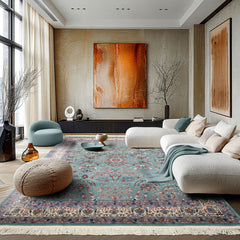
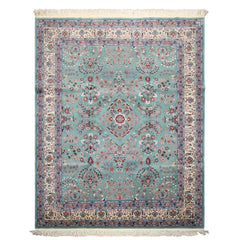
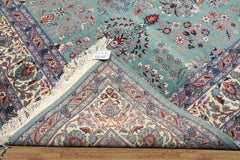
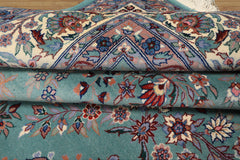

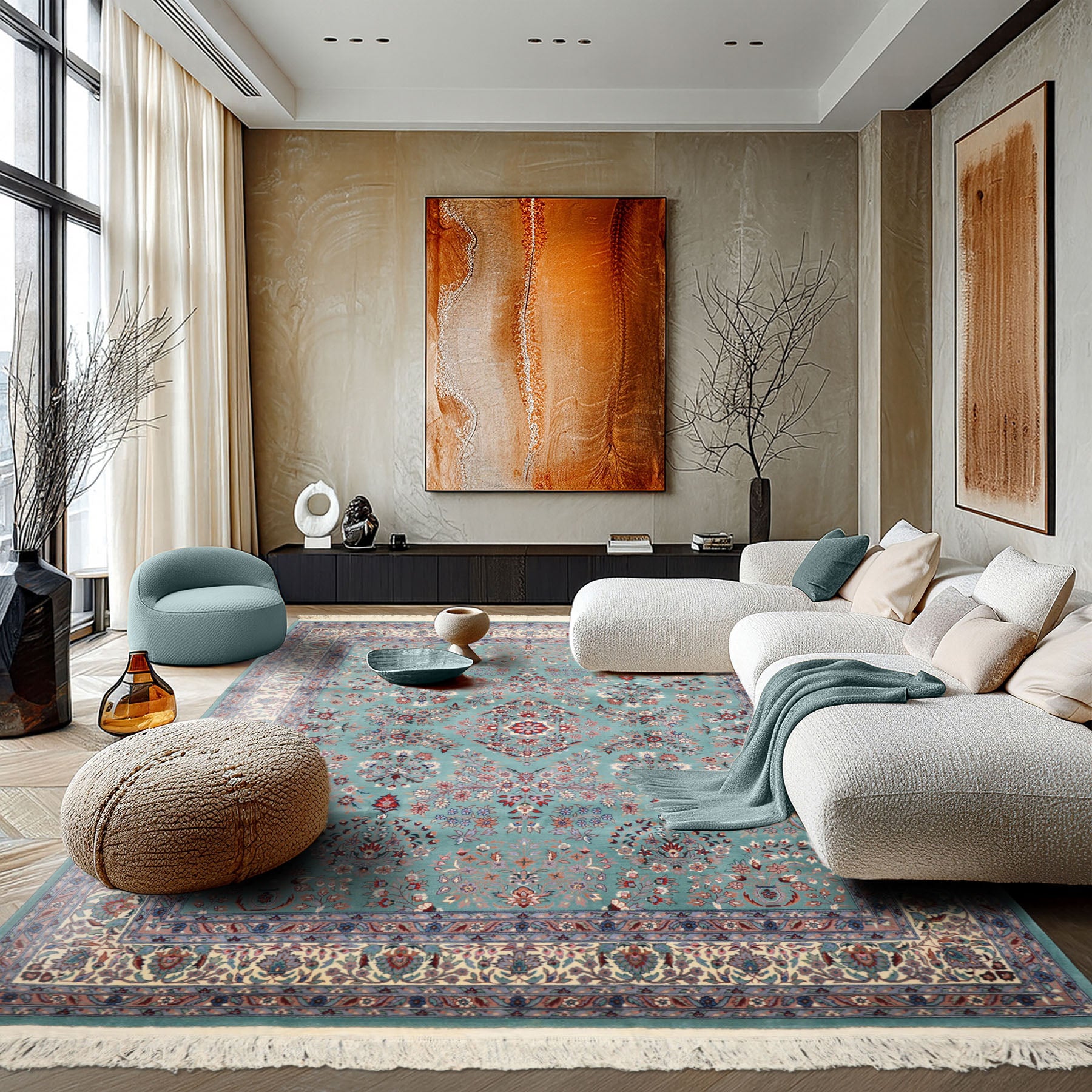
Story Behind the Art:In the world of traditional Persian rugs, the name Sarouk refers to carpets woven in and around Arak, its neighboring villages, and the fertile plains of Farahan in central Iran—an area internationally respected for centuries of master weaving. Early Sarouk rugs from the 19th century were typically composed with dense allover patterns such as Herati and Gul Hennai, woven at roughly 100 asymmetrical knots per square inch on durable cotton foundations. As global tastes evolved in the late 1800s, Sarouk workshops adopted a more formal and architectural design language influenced by prestigious Tabriz rugs, introducing centralized floral medallions and strict symmetry. Following World War I, Sarouk artisans reshaped the aesthetic once again, favoring open fields decorated with loosely arranged floral sprays that conveyed elegance and spaciousness. This signature look became the defining identity of Sarouk rugs and remains highly sought after by collectors today. Modern Sarouk-style hand-knotted wool rugs are now produced not only in Iran but also in India, Romania, and Pakistan, continuing the legacy of Persian craftsmanship in a form suited for contemporary luxury interiors.
Thanks for subscribing!
This email has been registered!
Don’t Miss Extra 5% Off on Your Order
Use code SALE5 at checkout and enjoy 5% off sitewide.


