


Before you leave...
Don’t Miss Extra 5% Off on Your Order
Extra 5% OFF
Use code SALE5 at checkout and enjoy 5% off sitewide.
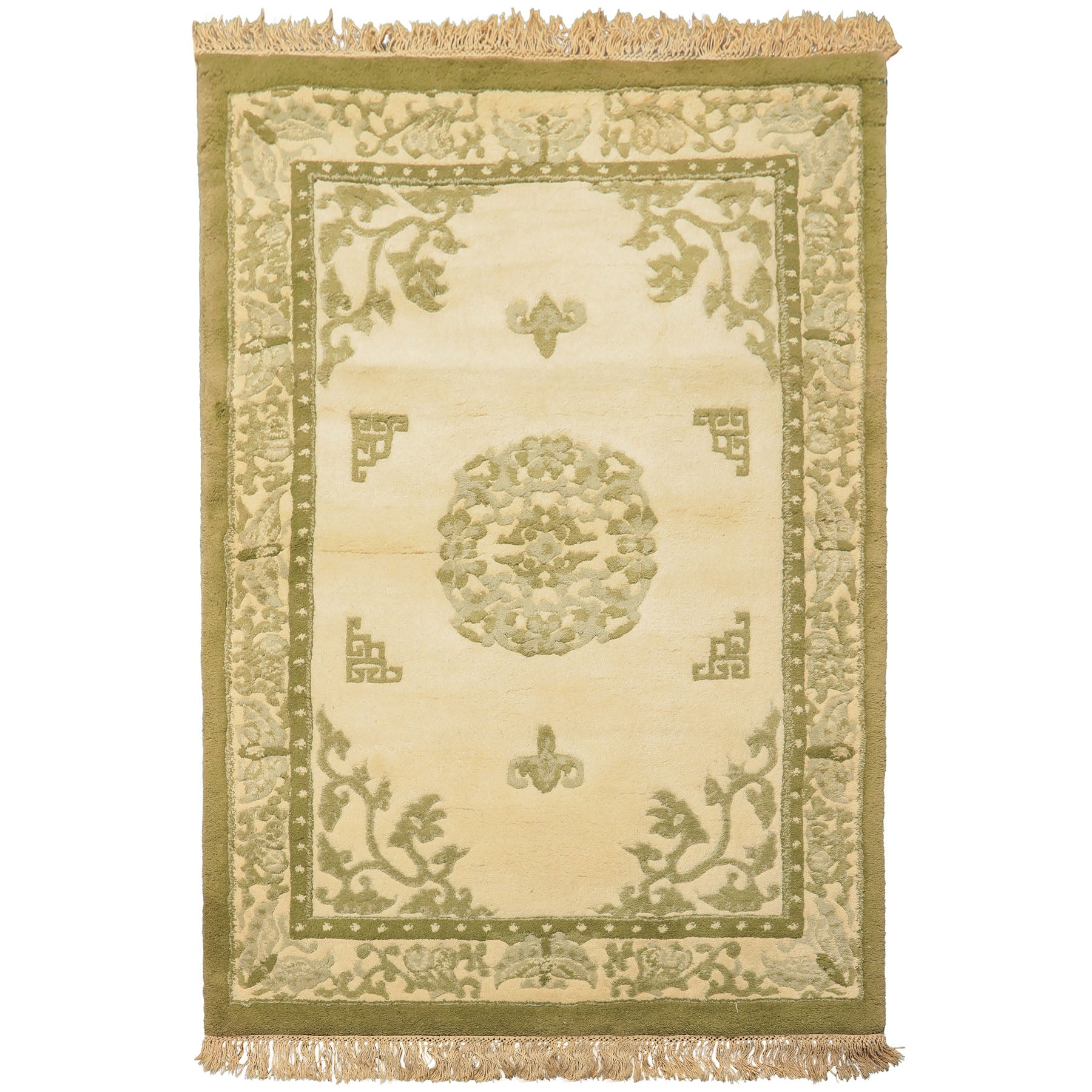
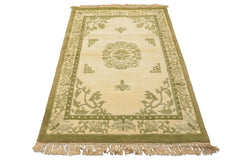
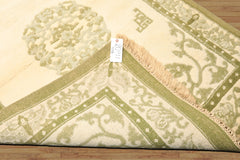
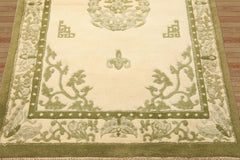
Story Behind the Art: Tibetan Art Deco rugs represent a fascinating intersection of Himalayan weaving traditions and the bold geometric aesthetics of 1920s–1930s modernism. Emerging as Tibetan and Nepalese artisans adapted their craft to Western markets, these rugs transformed traditional auspicious symbols and natural motifs into streamlined, stylized compositions characterized by angular forms, symmetrical patterns, and striking color contrasts. Using the time-honored slit-loop knotting technique, these rugs achieve the same luxurious depth and tactile richness of classical Tibetan pieces, yet they speak a visual language shaped by Art Deco’s modernist principles. Motifs were simplified, outlines sharpened, and colors arranged to maximize impact, producing rugs that are both exotic in heritage and contemporary in appearance. The resulting fusion of Tibetan craftsmanship with Art Deco design offered collectors pieces that bridged Eastern artisanal mastery with Western decorative trends, making them highly sought after then and continuing to inspire contemporary weavers today. Each rug in this lineage embodies a dialogue across cultures and eras, preserving the meticulous artistry of Himalayan weaving while embracing the confident, geometric elegance of early twentieth-century modernism.
Thanks for subscribing!
This email has been registered!
Don’t Miss Extra 5% Off on Your Order
Use code SALE5 at checkout and enjoy 5% off sitewide.


