


Before you leave...
Don’t Miss 5% Off on Your Order
5% OFF
Use code SALE5 at checkout and enjoy 5% off sitewide.
 ">
">
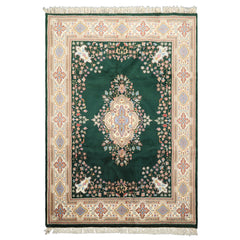
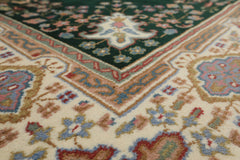
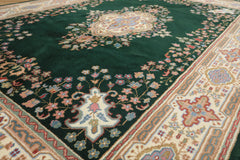

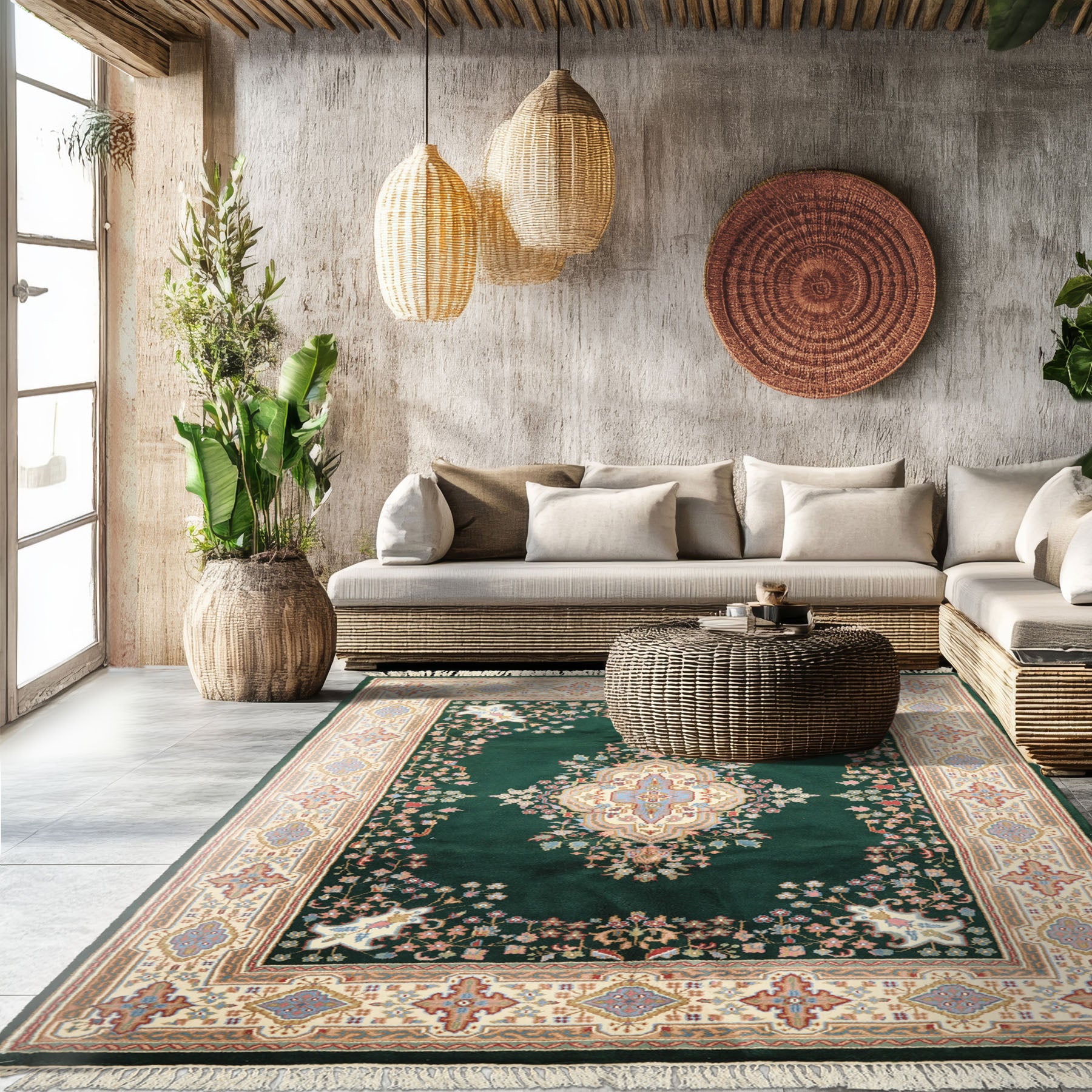
This 6'1''x9' Indo Kerman hand-knotted rug features a thick 0.75-inch plush pile and a cotton foundation, offering a luxuriously soft and velvety feel. A refined medallion anchors the center, surrounded by delicate floral vines and blossoms arranged symmetrically. The deep green field is balanced by ivory, beige, rose, and soft blue accents, with touches of tan and gold adding warmth. This rug is well suited for bedrooms, formal sitting rooms, or intimate living spaces.
Story Behind the Art: Renowned for their exceptional technical precision and decorative sophistication, Kerman rugs originate from the historic city of Kerman in southeastern Iran. This region has been a celebrated center of workshop weaving since the Safavid era (1501–1732), producing some of the most refined Persian rugs ever created. Kerman rugs are best known for their elegant floral and architectural compositions, often featuring a richly detailed central medallion framed by an ornate main border. Design variations include Shah Abbasi medallion-and-corner layouts, garden scenes, vase and boteh patterns, tree-of-life imagery, hunting motifs, animal themes, as well as allover floral and striped arrangements. Among these, the vase or boteh design stands as the most iconic, characterized by repeating vases or boteh motifs scattered across a field filled with floral scrolls and palmettes. Kerman rugs are admired for their finely executed weave, graceful drawing, and extraordinary range of colors—typically using 15 to 30 distinct shades in a single rug. Due to their complexity and craftsmanship, a traditional Kerman rug often requires more than a year to complete, reinforcing its status as an heirloom-quality oriental area rug.
Thanks for subscribing!
This email has been registered!
Don’t Miss 5% Off on Your Order
Use code SALE5 at checkout and enjoy 5% off sitewide.


