


Before you leave...
Don’t Miss Extra 5% Off on Your Order
Extra 5% OFF
Use code SALE5 at checkout and enjoy 5% off sitewide.
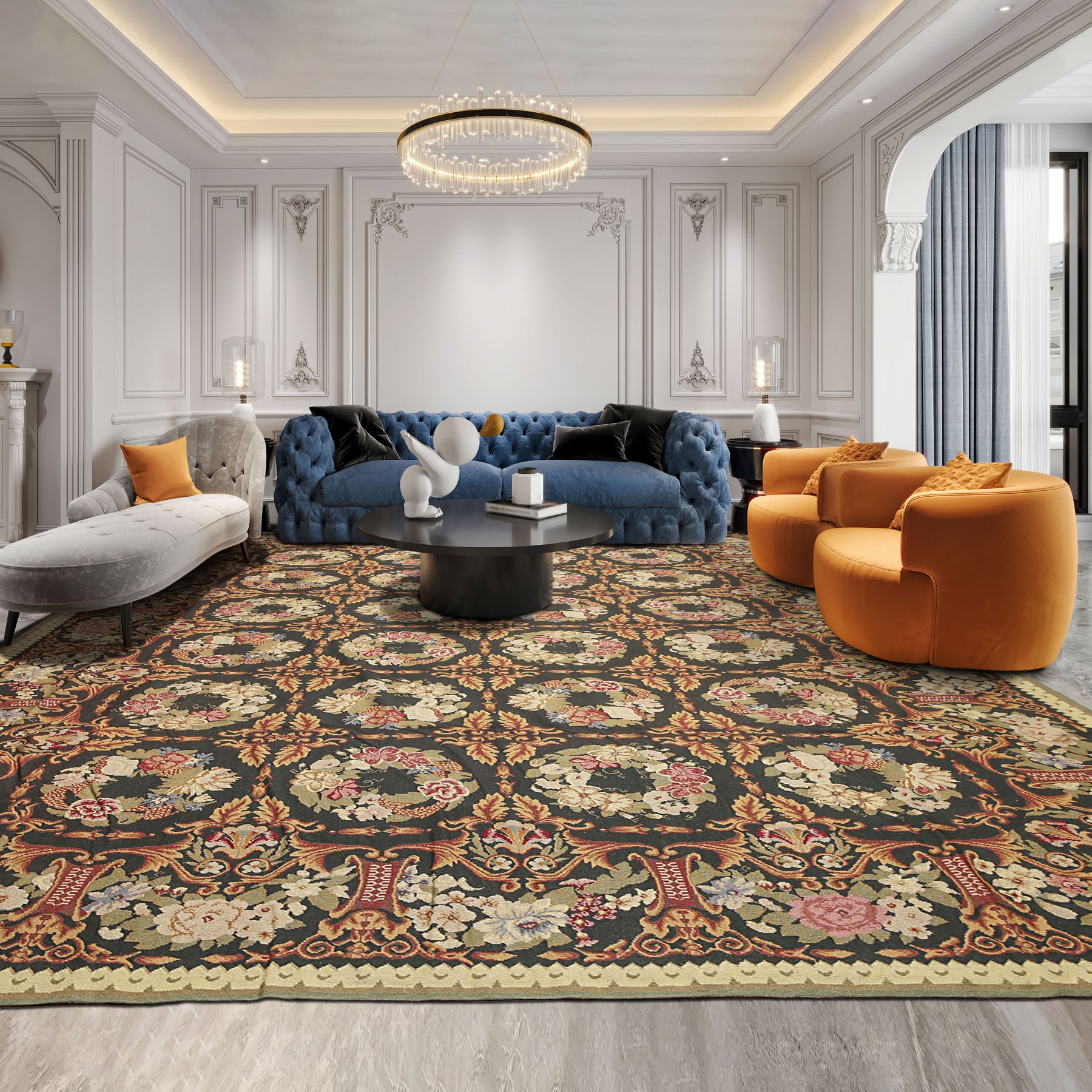
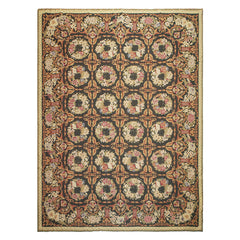
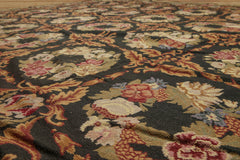
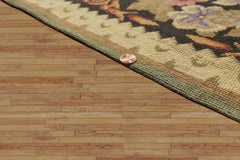
Story Behind the Art: The tradition of French needlepoint rugs began in France during the 17th and 18th centuries, when master artisans working in the famed Aubusson and Savonnerie workshops created floor coverings exclusively for royal courts and noble households. These rugs were designed to mirror the elegance of classical European art, incorporating graceful floral medallions, scrolling vines, decorative garlands, and softly harmonized pastel color palettes. Each piece was carefully hand-stitched onto canvas using the time-honored petit point and gros point methods, techniques that allowed for precise detailing and painterly refinement. As symbols of luxury and taste, needlepoint rugs were commonly placed in grand salons, châteaux, and palatial interiors, where craftsmanship and design were held in equal esteem. By the latter half of the 20th century, production expanded beyond Europe, with China becoming a major center for French-style needlepoint rugs. Utilizing generations of weaving and embroidery expertise, Chinese craftsmen began producing Aubusson and Savonnerie-inspired designs on a global scale. These hand-stitched or handwoven rugs, typically made with wool on cotton canvas, faithfully capture the elegance and visual depth of antique French originals while making the style more attainable for contemporary homes.
Thanks for subscribing!
This email has been registered!
Don’t Miss Extra 5% Off on Your Order
Use code SALE5 at checkout and enjoy 5% off sitewide.


