

Rug Size Guide
A good area rug can anchor a room, define it, add warmth, and help layer décor. But with so many sizes, it’s easy to choose a rug that feels too small (or overwhelms the space). This guide walks you through the most common, room-by-room sizing approaches so each space feels balanced and intentional.
Living Room
In the living room, a rug ties the room’s design elements together and creates a balanced, inviting space. It defines seating areas, adds warmth and texture, reduces noise, and helps protect flooring from wear—making the room more welcoming for gathering and relaxation.

Consider the Size of Your Room
The first step is to measure your living room. This gives you a clear idea of what sizes fit your space without looking cramped or too small.
Furniture Arrangement
- All Furniture on the Rug: Best for larger living rooms. The rug should fit couches, chairs, and tables comfortably. Typically 9x12 or 8x10.
- Front Legs on the Rug: Ideal for medium to large rooms. Helps define seating without needing an oversized rug. Usually 6x9 or 8x10.
- Only the coffee table on the rug: Best for smaller rooms or a minimalist layout. Commonly 4x6 or 5x7.
Rug Placement Tips
- Leave Space for Walking: Aim for ~18" of exposed floor in large rooms (8" can work in smaller rooms).
- Keep Visual Balance: Try to maintain equal spacing from furniture to rug edges.
- Use Rug Pads: Helps prevent slipping and supports the rug’s shape over time.
Choosing the perfect living room rug size
- Visualize Before Buying: Use painter’s tape to outline the rug size on your floor.
- Think about the rug’s purpose: Define a seating zone, add warmth, or act as décor.
- Don’t forget style and color: Size matters, but pattern and palette shape the whole feel.
In the living room, a rug acts as a warm foundation for your furniture—inviting everyone to gather and connect. Choose a size that lets all pieces touch the rug, or go smaller to spotlight the coffee table with color and texture. With careful sizing, your living room becomes more functional, comfortable, and visually complete.

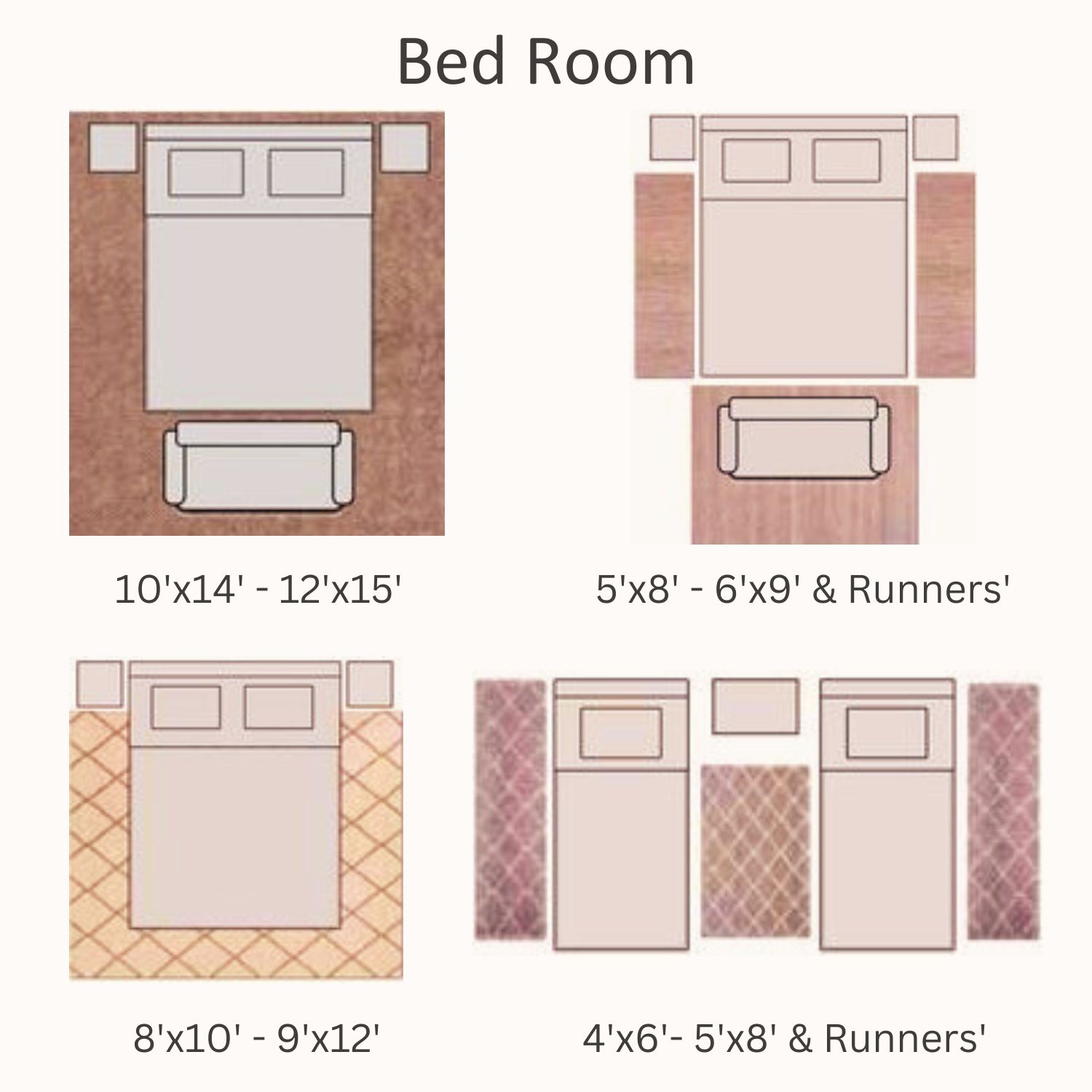
Bedroom
Rugs add a soft, warm surface underfoot—especially first thing in the morning—while helping reduce noise for a calmer space. They also protect floors from wear and help prevent slipping, making them both decorative and practical.

Consider Your Bed Size
The size of your bed largely determines the rug size you need:
- Double Bed: A 5x8 works well under the bed with coverage at the sides and front.
- Queen Bed: An 8x10 provides comfortable coverage around the sides and foot.
- King Bed: A 9x12 offers generous visible rug around the bed edges.
Rug Position Choices
- Under the Bed: The classic approach—rug extends beyond sides and foot for balance.
- At the Foot of the Bed: A smaller rug/runner for style without full coverage.
- Side Runners: Add softness when stepping out of bed with minimal floor coverage.
Ways to pick the Right Bedroom Rug Size
- Measure Your Room: Know the space around your bed before shopping.
- Consider Furniture: Ideally the rug starts above (not under) nightstands.
- Think about impact: Large rugs set the room’s tone; small rugs add warmth without dominating.
- Practicality matters: Choose materials that feel good and are easy to maintain.
With the right rug, your bedroom becomes more than a place to sleep—it becomes a cozy, stylish retreat. Consider bed size, layout, and your comfort preferences, and you’ll land on a rug that looks intentional and feels amazing daily.
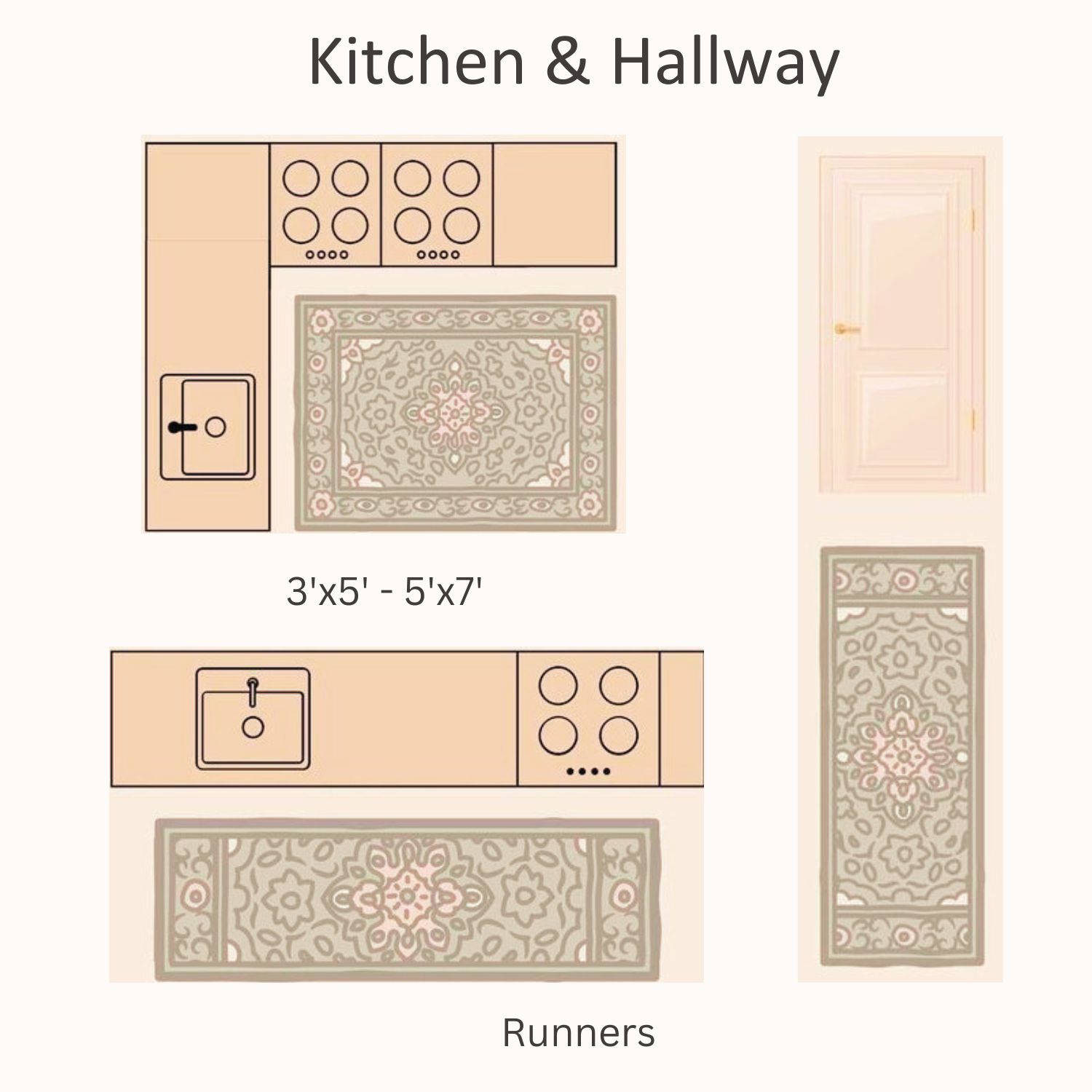
Kitchen & Hallways
Rugs in kitchens and hallways add comfort, protect floors in high-traffic zones, absorb sound, and elevate the overall look—especially when sized correctly. In kitchens, rugs help where you stand most; in hallways, runners create a welcoming path and visual flow.

Kitchen Rug Sizing
- Runner Rugs: Great for narrow work zones. Common sizes: 2x3, 2x4, 2x6 (layout-dependent). Explore runners.
- Area Rugs: For larger kitchens or eat-in spaces: 4x6 or 5x7 can add comfort and style.
- Considerations: Measure for door clearance and choose easy-clean materials (kitchens = spills).
Hallway Rug Sizing
- Runner Rugs: Best match for hallways. Standard lengths: 6, 8, 10, 12 feet; widths: 2–3 feet.
- Width & Length: Leave a few inches of floor visible on each side for a framed look.
- Custom Size: If your hallway is unusual, consider made-to-fit options.
Ways to pick Kitchen and Hallway Rug
- Sturdiness: Choose wool, nylon, or polypropylene for high-traffic durability.
- Safety: Use a nonslip rug pad underneath for grip + cushioning.
- Style: Pick a rug that complements both spaces since hallways visually connect rooms.
With the right size, material, and placement, kitchen and hallway rugs improve comfort, safety, and style—while protecting floors where it matters most.
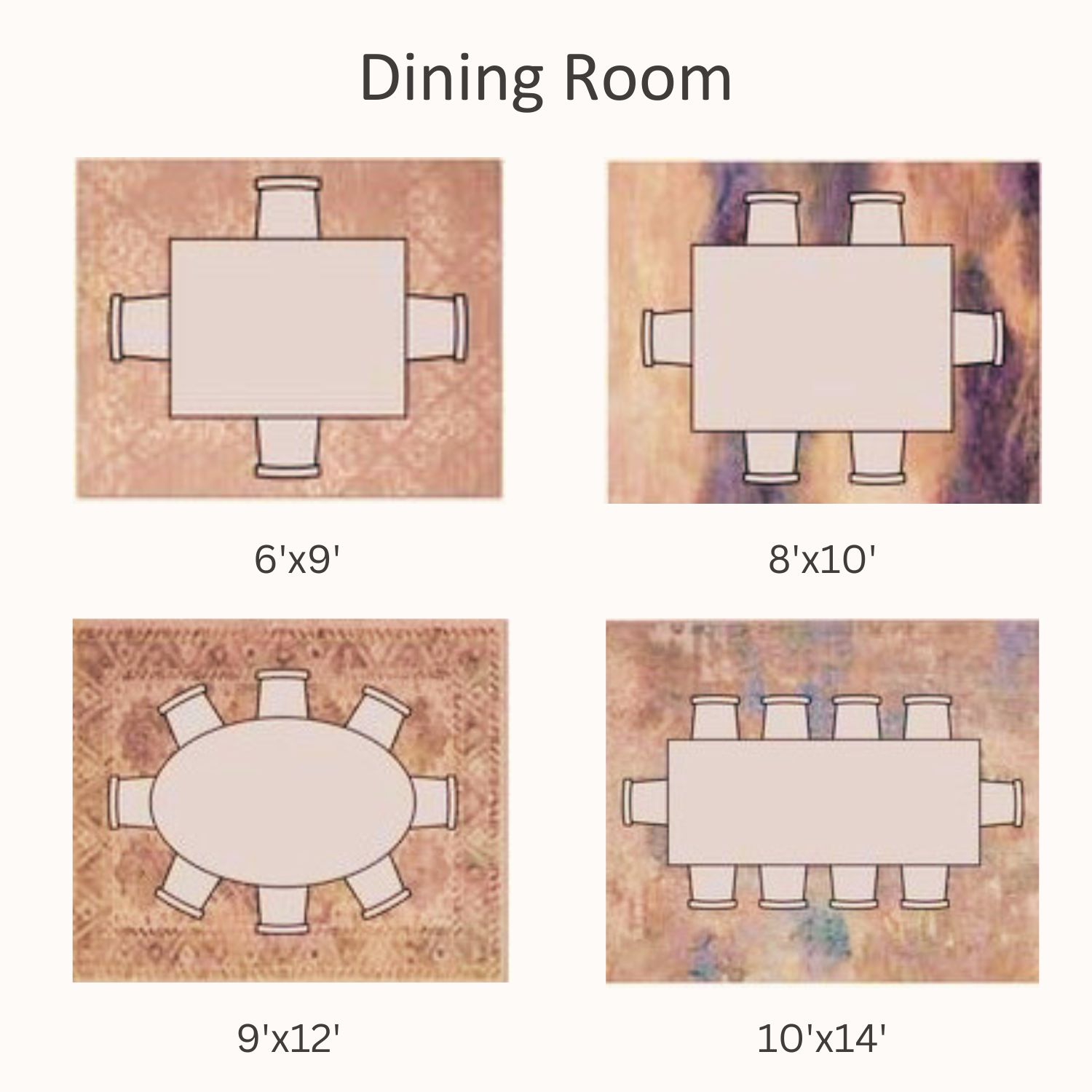
Dining Room
In the dining room, a rug anchors the table, defines the dining zone, and adds warmth while reducing noise—making meals feel more inviting. It also protects floors from chair movement and helps preserve flooring and furniture.
A simple rule: choose a rug large enough that chairs stay on the rug even when pulled back. Typically, the rug should extend about 24 inches beyond the table on all sides. For many dining setups, 8x10 or 9x12 works well.

Normal Rug Size for Dining Room
Shape and placement of the rug
For round tables, a round rug complements the shape beautifully. For rectangular or square tables, rectangular or square rugs align best. Center the table on the rug for balance and even wear, and leave a visible border of flooring around the rug’s edge.
Additional Tips
- Material: Choose durable, easy-clean fibers (spills happen in dining rooms).
- Style & color: Match the room’s theme and how pattern/texture plays with furniture.
- Rug pad: Use a rug pad to prevent slipping and add cushion.
Think of the dining rug as the “stage” for your table—extending hospitality so chairs glide smoothly, even when guests lean back during conversation. It’s the invisible boundary that brings the whole room together.
Final Takeaway
By following these guidelines, you can select the perfect rug size for each room—improving comfort, protecting floors, and making your décor feel intentional. Whether you want a statement piece that defines a space or a practical solution for high-traffic zones, the right size will help your home feel complete. The goal isn’t just to fill a space, but to match the scale, proportion, and style of the room for a balanced, polished look.


